EU summit deal reached after Italy demanded action on migrant crisis


Brussels (CNN) European Union leaders have averted the collapse of a key summit with a deal struck on migration in the early hours of Friday morning, which will see the burden of resettling refugees shared more widely among member states.
The EU will also look into setting up migration centers in countries outside Europe, according to a statement from the EU Council. Italy had threatened to block a deal if migration was not addressed, a diplomat told CNN on Thursday.
The meeting of European leaders, intended to focus on Brexit, was dominated by the issue of how to deal with the arrival of boatloads of desperate migrants attempting to cross into European waters.
At around 5 a.m. Brussels time Friday, European Council President Donald Tusk tweeted that leaders had agreed on a joint statement from the EU28 summit that included a settlement on migration.
Italian Prime Minister Giuseppe Conte said the deal took “long negotiation, but from today Italy is no longer alone.”
In a statement, the Council said it had agreed to adopt a “comprehensive approach to migration that combines more effective control of the EU’s external borders, increased external action and the internal aspects, in line with our principles and values.”
“The European Council is determined to continue and reinforce this policy to prevent a return to the uncontrolled flows of 2015 and to further stem illegal migration on all existing and emerging routes,” it said.
It added that more support would be provided to Italy and other Mediterranean countries, and “efforts to stop smugglers operating out of Libya or elsewhere should be further intensified.”
British Prime Minister Theresa May praised the agreement, saying it addressed many issues the UK had previously raised, and would “ensure that people aren’t making these dangerous journeys … in the hands of people smugglers.”
French President Emmanuel Macron said that despite suggestions a deal would be “impossible,” member states had succeeded in reaching a “European solution.”
Migration deadlock
Earlier, in an impassioned speech ahead of the summit, German Chancellor Angela Merkel said migration could be a “make or break” issue for the European Union.
“We cannot leave those countries where asylum seekers arrive to deal with (the problem) alone,” she said.
Merkel is facing considerable pressure at home to reduce the number of asylum seekers Germany accepts and agree to other restrictions on immigration, or risk a collapse of her ruling coalition.
She became the accidental architect of European migration policy in 2015 when she decided to allow hundreds of thousands of asylum seekers that had crossed the Balkans on foot into Germany.
Italy’s new government has closed ports to ships rescuing migrants daring the dangerous Mediterranean Sea crossing from north Africa, and taken a hardline approach on negotiations.
In an interview with CNN this week, Italian interior minister Matteo Salvini said “we need to revisit” the Dublin Regulation, which requires asylum seekers to be registered in the first European country they enter — regardless of whether they entered legally or otherwise.
The Dublin rules have put a huge amount of pressure on southern and eastern European nations, where the vast majority of refugees fleeing war and unrest in the Middle East and North Africa first enter the Union, and meant richer countries in north western Europe have borne less of the burden.
In an invitation letter sent to EU leaders ahead of the summit, Council leader Tusk said a failure to ensure full control of Europe’s external borders risked strengthening the hand of newly emerging populist political movements.
“More and more people are starting to believe that only strong-handed authority, anti-European and anti-liberal in spirit, with a tendency towards overt authoritarianism, is capable of stopping the wave of illegal migration,” he said.
“If people believe them, that only they can offer an effective solution to the migration crisis, they will also believe anything else they say. The stakes are very high. And time is short.”
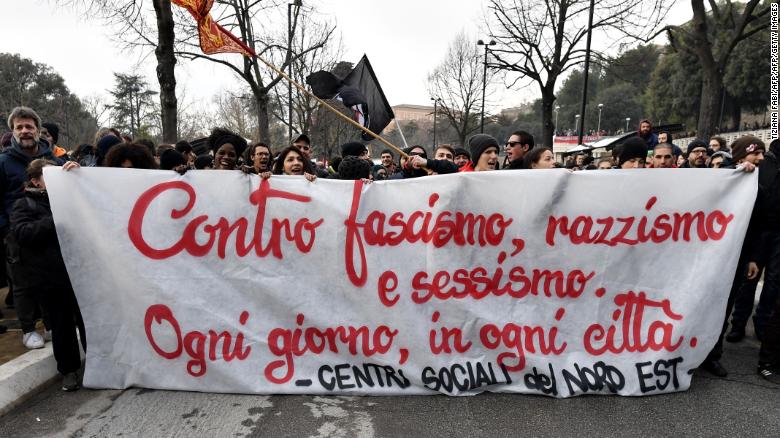
Italian demonstrators hold a banner reading “against fascism, racism and sexism.” Right wing, anti immigrant parties recently took power in Italy.
Desperate situation
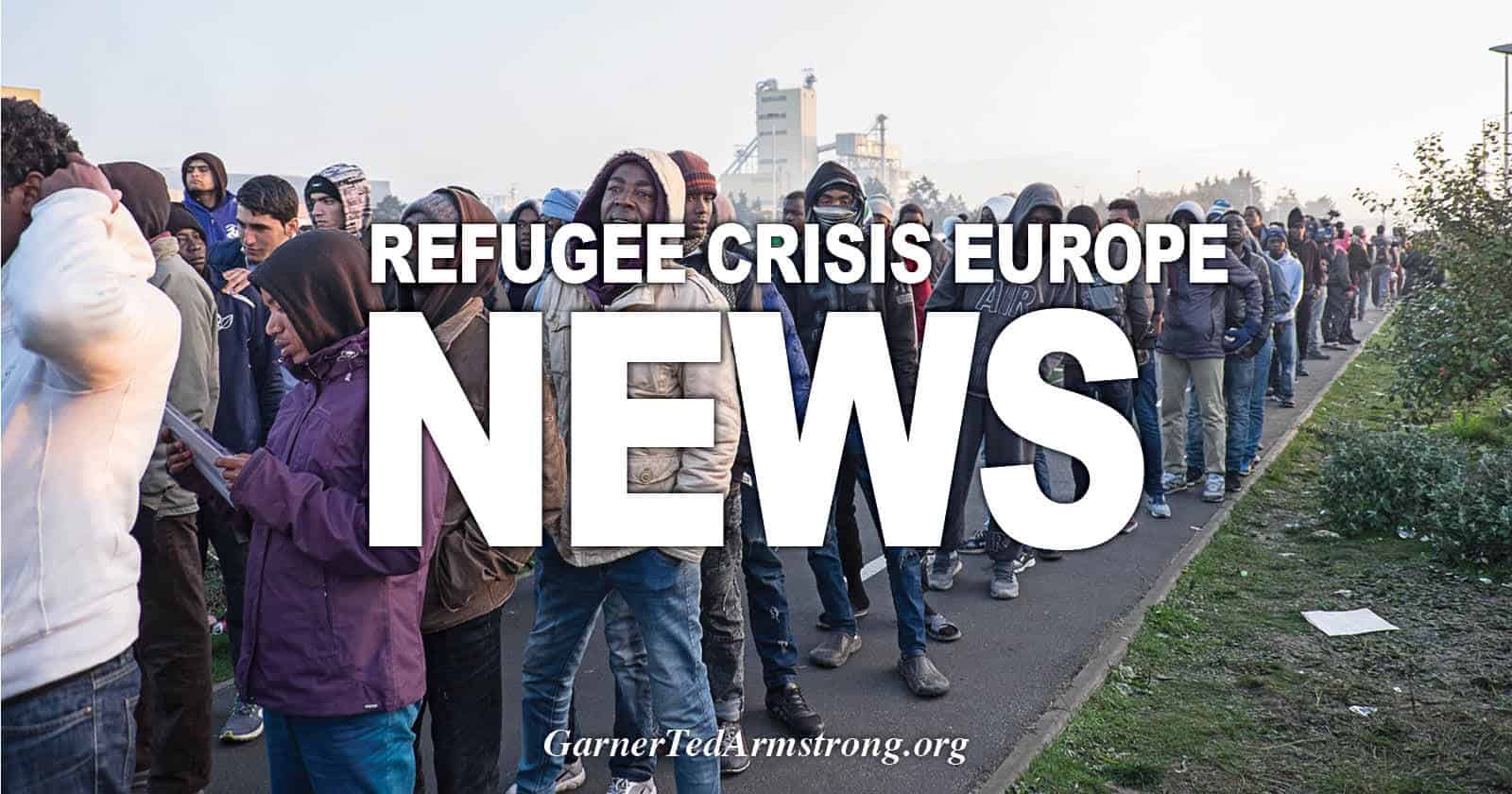
Despite a significant drop in the number of people seeking refuge in Europe, thousands of desperate migrants continue to make their way to European shores. Many make the perilous journey by sea.
As of June 6, there had been an estimated 785 deaths on the route this year, the International Organization for Migration (IOM) said, with the majority of the 33,400 migrants and refugees arriving through Greece and Italy.
This week, a search and rescue ship was stranded in the Mediterranean for five days with 233 migrants on board before it was finally permitted to dock in Malta.
European governments had wrangled over the responsibility for migrants arriving on the continent’s southern shores as conditions on the ship began to deteriorate.
Salvini, the Italian minister, had accused it of sailing under a “fake flag,” and Malta has impounded the ship while an investigation is carried out into whether it breached international law.
According to the International Maritime Organization, the Lifeline sails under a Dutch flag, supporting the ship’s assertion that it is correctly registered in the Netherlands.
Growing concern over migration comes at a time when Europe is already dealing with a lingering debt crisis, a rise in European populism, an escalating trade war with the United States, questions over Washington’s commitment to NATO and faltering negotiations for Brexit.
If Italy blocks a joint statement on these other important issues, the entire EU summit would be rendered ineffective.